登录 注册  |
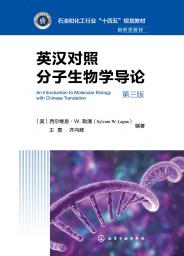
英汉对照分子生物学导论
暂无评分 作者:(美)西尔维恩·W.勒潘(Sylvain W.Lapan),王勇,齐向辉编著 出版社:化学工业出版社 出版日期:2024-07-01 ISBN:978-7-122-44659-6 中图分类:Q7 ( 生物科学 > 分子生物学 )
评分: 借阅次数:0 收藏人数:0 推荐次数:0
封面 书名页 版权页 作者简介 Foreword 前言 Foreword to the First Edition 第一版前言 Foreword to the Section Edition 第二版前言 目录页 Introduction Chapter 1 Amino Acids to Proteins 1.1 Protein Composition 1.2 Protein Conformations 1.2.1 Describing Protein Structure 1.2.2 Chemical and Physical Basis for Protein Folding 1.3 Protein Structure and Function:A Few Examples 1.4 The Dynamics of Proteins 1.5 Experiments Summary Vocabulary Review Questions Exploration Questions Chapter 2 Nucleic Acids 2.1 Properties of a Genetic Material 2.2 Nucleic Acids and DNA structure 2.2.1 Nucleotides 2.2.2 General Structure of Nucleic Acids 2.2.3 Structure of DNA 2.3 Molecular Identification 2.3.1 Identification of DNA Molecules 2.3.2 Identification of RNA Molecules 2.4 DNA as the Genetic Material 2.5 DNA in the Cell 2.6 RNA(Ribonucleic Acid) 2.7 Experiments Summary Vocabulary Review Questions Exploration Questions Chapter 3 Transcription in Prokaryotes:Mechanism and Regulation 3.1 Why Use an RNA Intermediate 3.2 Mechanism of Transcription 3.2.1 Promoters 3.2.2 RNA Polymerase 3.2.3 Transcription Mechanism in Three Phases 3.3 Regulation of Gene Expression in Prokaryotes 3.3.1 Coordinate Regulation 3.3.2 The lac Operon 3.3.3 The Trp Operon 3.3.4 AraandGalOperons 3.4 Experiments Summary Vocabulary Review Questions Exploration Questions Chapter 4 Transcription in Eukaryotes:Mechanism and Regulation 4.1 Eukaryotic RNA Polymerases 4.2 Eukaryotic Promoters 4.3 General Transcription Factors and Initiation 4.3.1 TFⅡD 4.3.2 Other TFⅡs 4.3.3 General Transcription Factors for RNA PolymeraseⅠandⅢ 4.4 Specific Transcription Factors and Transcriptional Regulation 4.4.1 Activators 4.4.2 Repressors 4.4.3 Enhancers and Silencers 4.5 Structures of Specific Transcription Factors 4.5.1 DNA-Binding Motifs in Prokaryotes 4.5.2 DNA-Binding Motifs in Eukaryotes 4.6 Experiments 4.6.1 RNA Polymerase Targets 4.6.2 Modularity of Specific Transcription Factors Summary Vocabulary Review Questions Exploration Questions Chapter 5 mRNA Modifications in Eukaryotes 5.1 Capping 5.2 Polyadenylation 5.3 Splicing 5.3.1 The Basic Splicing Reaction 5.3.2 Proteins Involved in Splicing 5.3.3 Self-Splicing 5.3.4 Trans-Splicing 5.3.5 Reasons for Introns 5.4 mRNA Editing 5.5 Experiments Summary Vocabulary Review Questions Exploration Questions Chapter 6 Translation 6.1 The Genetic Code 6.2 Mechanism of Translation in Prokaryotes 6.2.1 Initiation 6.2.2 Elongation 6.2.3 Termination 6.3 Translation in Eukaryotes 6.4 tRNA Structure and Wobble 6.4.1 Anti-codons 6.4.2 Wobble 6.5 Experiments 6.5.1 Deciphering the Genetic Code 6.5.2 Direction of Translation Summary Vocabulary Review Questions Exploration Questions Chapter 7 Regulation of Gene Expression in Eukaryotes 7.1 Histones and Transcriptional Regulation 7.1.1 Histones and DNA Organization 7.1.2 Histones and Transcription 7.1.3 Covalent Modification of Histones 7.1.4 Proteins that Recognize and Modify Histones 7.2 Post-Transcriptional Regulation 7.3 Nuclear Export 7.4 RNA Stability 7.4.1 mRNA Stability Regulation by Proteins 7.4.2 mRNA Stability Regulation by Small RNAs 7.5 Translational Control 7.5.1 Global Control 7.5.2 mRNA-Specific Control 7.6 mRNA Localization 7.7 Protein Regulation 7.8 Experiments 7.8.1 Beads-on-a-string Structure 7.8.2 Repression of Gene Expression in Heterochromatin Summary Vocabulary Review Questions Exploration Questions Chapter 8 DNA Replication 8.1 Semi-Conservative Replication 8.2 Initiation of Replication 8.3 Semi-Discontinuous Replication 8.4 Elongation of Replication and its Proteins 8.4.1 Helicase and SSBs 8.4.2 DNA Polymerases 8.4.3 Explanation for 3'→5' Synthesis 8.4.4 Primers 8.5 DNA Topology 8.6 DNA Replication in Eukaryotes 8.6.1 Initiation of DNA Replication in Eukaryotes 8.6.2 Telomeres 8.7 Experiments Summary Vocabulary Review Questions Exploration Questions Chapter 9 Mutations and Mutation Repair 9.1 DNA Damage and Mutations 9.2 Point Mutations 9.2.1 Mismatched Base 9.2.2 Spontaneous Mutations 9.2.3 Induced Mutations 9.3 Insertions and Deletions 9.3.1 Strand Slippage 9.3.2 Transposons 9.3.3 Intercalating Agents 9.4 Large-Scale DNA Changes 9.5 Consequences of DNA Mutations 9.5.1 Consequences of Point Mutations 9.5.2 Consequences of Insertions and Deletions 9.5.3 Consequences of Translocations 9.5.4 Mutation Hot Spots 9.6 Mutation Repair 9.6.1 Direct Reversal 9.6.2 Mismatch Repair 9.6.3 Nucleotide Excision Repair 9.6.4 Base Excision Repair 9.6.5 Double-Stranded Break Repair 9.7 Experiments 9.7.1 Nucleotide Excision Repair and Human Disease 9.7.2 The Ames Test Summary Vocabulary Review Questions Exploration Questions Chapter 10 Recombination 10.1 Homologous Recombination 10.1.1 Mechanism for Crossing-Over 10.1.2 Mechanism for Double-Stranded Break Repair 10.1.3 The RecBCD Pathway 10.1.4 Gene Conversion 10.2 Non-homologous Recombination 10.2.1 Transposons 10.2.2 Retrotransposons 10.2.3 Bacteriophage λ Integration 10.3 Gene Editing 10.3.1 ZFNs System 10.3.2 TALENs System 10.3.3 CRISPR/Cas System Summary Vocabulary Review Questions Exploration Questions Answers to Review Questions Index (Chinese) Index (English) Glossary References 绪论 第1章 从氨基酸到蛋白质 1.1 蛋白质的组成 1.2 蛋白质的构象 1.2.1 描述蛋白质的结构 1.2.2 蛋白质折叠的化学和物理基础 1.3 蛋白质的结构与功能:几个例子 1.4 蛋白质动力学 1.5 实验研究 小结 词汇 习题 思考题 第2章 核酸 2.1 遗传物质的性质 2.2 核酸与DNA结构 2.2.1 核苷酸 2.2.2 核酸的一般结构 2.2.3 DNA的结构 2.3 分子鉴定 2.3.1 DNA分子鉴定 2.3.2 RNA分子鉴定 2.4 DNA作为遗传物质 2.5 细胞中的DNA 2.6 RNA(核糖核酸) 2.7 实验研究 小结 词汇 习题 思考题 第3章 原核生物转录:机理与调控 3.1 为什么使用RNA作为中间物 3.2 转录机理 3.2.1 启动子 3.2.2 RNA聚合酶 3.2.3 转录机理的三个阶段 3.3 原核生物基因表达调控 3.3.1 协同调控 3.3.2 乳糖操纵子 3.3.3 色氨酸操纵子 3.3.4 阿拉伯糖与半乳糖操纵子 3.4 实验研究 小结 词汇 习题 思考题 第4章 真核生物转录:机理与调控 4.1 真核生物RNA聚合酶 4.2 真核生物启动子 4.3 通用转录因子与转录起始 4.3.1 TFⅡD 4.3.2 其他TFⅡs 4.3.3 RNA聚合酶Ⅰ和Ⅲ的通用转录因子 4.4 特异转录因子与转录调控 4.4.1 激活蛋白 4.4.2 阻遏蛋白 4.4.3 增强子和沉默子 4.5 特异转录因子的结构 4.5.1 原核生物DNA结合基序 4.5.2 真核生物DNA结合基序 4.6 实验研究 4.6.1 RNA聚合酶的目标 4.6.2 特异转录因子的模块化 小结 词汇 习题 思考题 第5章 真核生物mRNA的修饰 5.1 加帽 5.2 聚腺苷酸化 5.3 剪接 5.3.1 基本的剪接反应 5.3.2 在剪接中发挥作用的蛋白质 5.3.3 自我剪接 5.3.4 反式剪接 5.3.5 内含子存在的原因 5.4 mRNA编辑 5.5 实验研究 小结 词汇 习题 思考题 第6章 翻译 6.1 遗传密码 6.2 原核生物翻译机理 6.2.1 起始 6.2.2 延伸 6.2.3 终止 6.3 真核生物翻译 6.4 tRNA的结构与摇摆 6.4.1 反密码子 6.4.2 摇摆 6.5 实验研究 6.5.1 破译遗传密码 6.5.2 翻译的方向 小结 词汇 习题 思考题 第7章 真核生物基因表达调控 7.1 组蛋白与转录调控 7.1.1 组蛋白与DNA组织 7.1.2 组蛋白与转录 7.1.3 组蛋白的共价修饰 7.1.4 识别和修饰组蛋白的蛋白质 7.2 转录后调控 7.3 细胞核输出 7.4 RNA稳定性 7.4.1 蛋白质调控mRNA稳定性 7.4.2 小RNA调控mRNA稳定性 7.5 翻译调控 7.5.1 全局控制 7.5.2 mRNA特异性控制 7.6 mRNA定位 7.7 蛋白质调控 7.8 实验研究 7.8.1 线珠结构 7.8.2 异染色质中基因表达的抑制 小结 词汇 习题 思考题 第8章 DNA复制 8.1 半保留复制 8.2 复制的起始 8.3 半不连续复制 8.4 复制延伸及其相关蛋白 8.4.1 解旋酶与SSB 8.4.2 DNA聚合酶 8.4.3 关于3'→5'合成 8.4.4 引物 8.5 DNA拓扑学 8.6 真核生物DNA复制 8.6.1 真核生物DNA复制起始 8.6.2 端粒 8.7 实验研究 小结 词汇 习题 思考题 第9章 突变与突变修复 9.1 DNA损伤与突变 9.2 点突变 9.2.1 错配的碱基 9.2.2 自发突变 9.2.3 诱发突变 9.3 插入和缺失 9.3.1 链滑动 9.3.2 转座子 9.3.3 嵌入剂 9.4 大规模DNA变化 9.5 DNA突变的后果 9.5.1 点突变的后果 9.5.2 插入和缺失的后果 9.5.3 易位的后果 9.5.4 突变热点 9.6 突变修复 9.6.1 直接回复 9.6.2 错配修复 9.6.3 核苷酸切除修复 9.6.4 碱基切除修复 9.6.5 双链断裂修复 9.7 实验研究 9.7.1 核苷酸切除修复与人类疾病 9.7.2 埃姆斯测验法 小结 词汇 习题 思考题 第10章 重组 10.1 同源重组 10.1.1 交换机理 10.1.2 双链断裂修复机理 10.1.3 RecBCD途径 10.1.4 基因转换 10.2 非同源重组 10.2.1 转座子 10.2.2 反转录转座子 10.2.3 λ噬菌体的整合 10.3 基因编辑 10.3.1 ZFN系统 10.3.2 TALEN系统 10.3.3 CRISPR/Cas系统 小结 词汇 习题 思考题 习题答案 中文索引 英文索引 名词解释 参考文献 封底 ..更多
推荐图书
@37℃女人
蠡湖吹雪著
新华出版社
“231”的情怀
王晓川编著
宁夏人民教育出版社
(正德)袁州府志校注
鄢文龙,欧阳文著
暨南大学出版社
“CUPL正能量”人物访谈活动报道合集 Ⅲ
黄瑞宇主编
中国政法大学出版社
“不益惩肃之理”的法理解析
陈江著
法律出版社
“创青春”创课十讲
团中央学校部等编著
清华大学出版社
返回顶部 用户指南
下载APP
关注我们